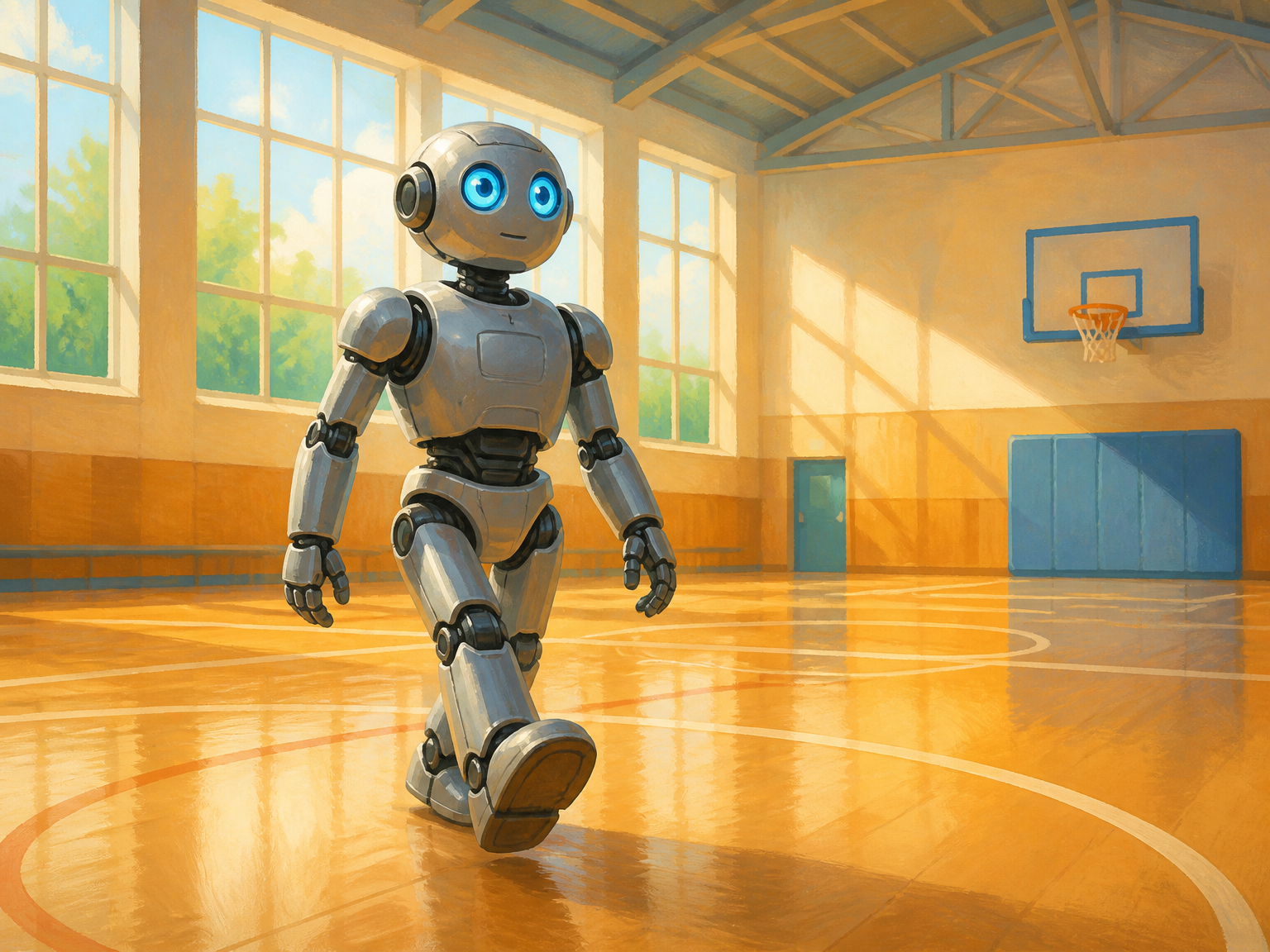
World Humanoid Robot Games
An Olympic-style competition where human-shaped robots run, box, play football, and do household tasks — all without falling over.
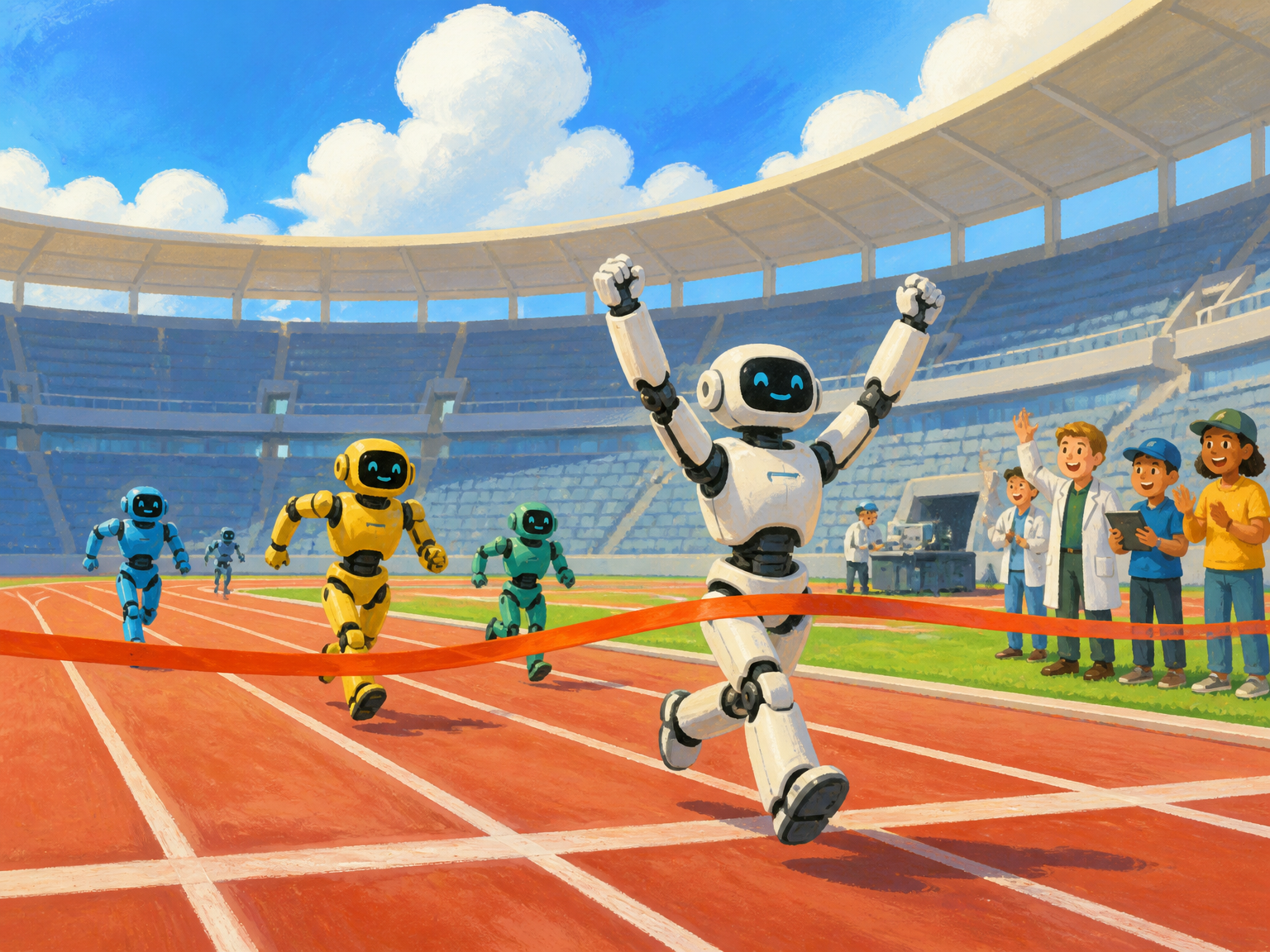
Imagine a stadium full of robots — not the kind that build cars in factories, but robots that look like people, with two legs, two arms, and a head. They are lining up at a starting line, just like human athletes do. Then a buzzer sounds, and they start to run. Their metal legs clank against the track. Some stumble. Some fall. But one crosses the finish line first. This is the World Humanoid Robot Games, and it is exactly what it sounds like: an Olympic-style competition for human-shaped robots.
What happens at the robot games?
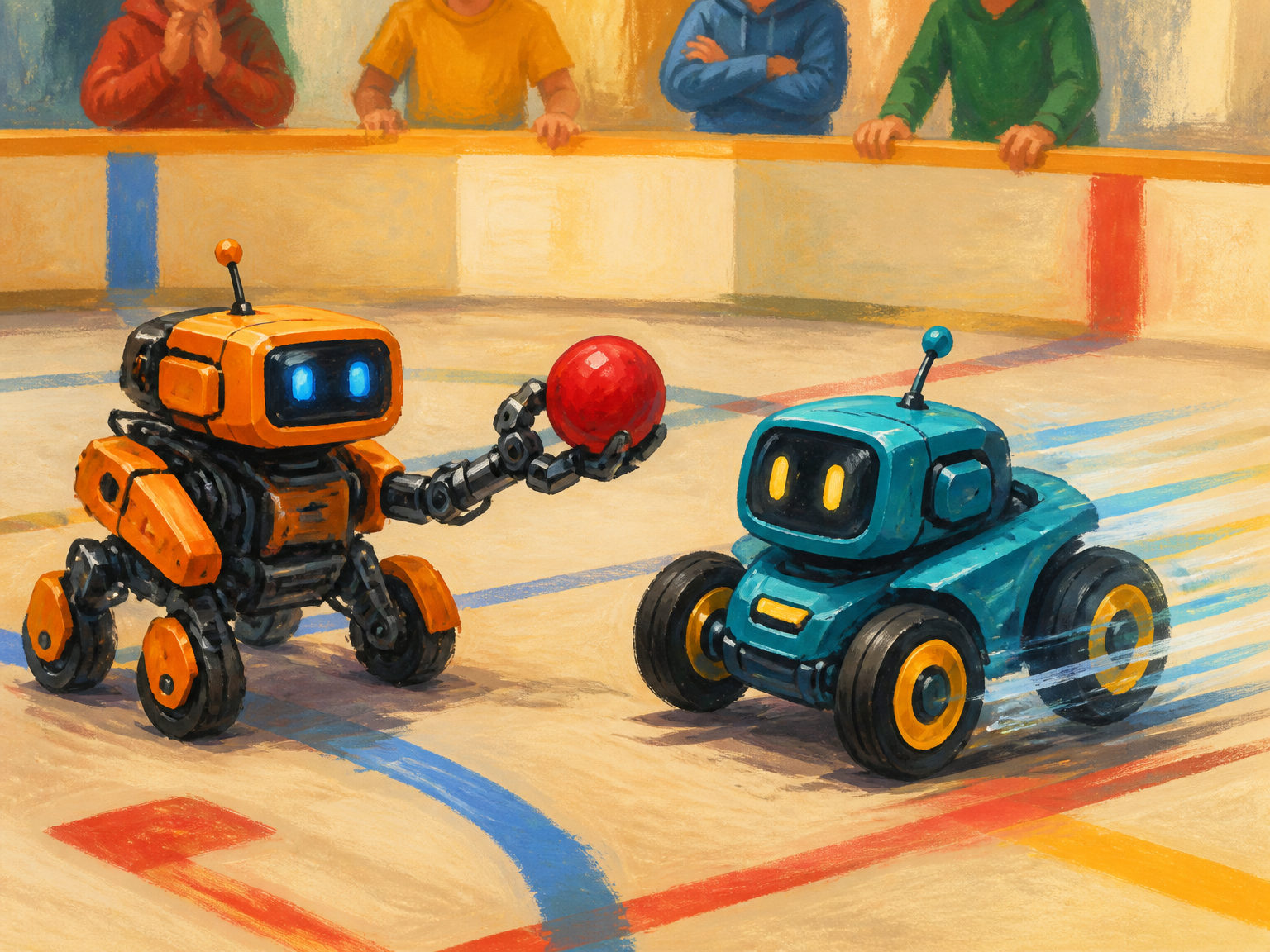
There are many different events. In the running races, robots sprint 100 metres or jog 1,500 metres. There are relay races where one robot passes a baton to another. In the boxing ring, two robots face off — they throw punches and try to knock each other over. There is even a football match, with teams of small humanoid robots kicking a ball around a pitch. But not all events are about sports. Some robots compete in "scenario" events: they clean a room, sort medicine bottles, or carry objects from one place to another. These tasks test how useful a robot can be in a real home or hospital.
How do robots run without falling over?
Walking on two legs is hard — even for humans, babies take months to learn. For a robot, it is one of the hardest things to do. A humanoid robot has sensors in its feet and joints that tell its computer brain where its body is. It makes tiny adjustments many times per second to stay balanced. When it runs, it has to push off the ground with just one foot, fly through the air for a split second, then land without toppling. In the early races, many robots crashed or wobbled. But by the second games in 2026, some races became "fully autonomous" — meaning the robots had to run without anyone controlling them by remote. That was a huge step forward.
Who makes these robots?
Teams come from all over the world. In 2025, 280 teams from 16 countries brought more than 500 robots to Beijing, China. Universities, companies, and research labs all entered. Some robots are tall and thin, built for speed. Others are short and sturdy, built for strength. One famous robot from the company Unitree, called H1, won the 1,500-metre race in 2025. Each team spends months programming and testing their robot before the games. It is a bit like training for a real sport — except the "athlete" is made of metal and wires.
What happens next?
The games are held every year. The second edition, in 2026, was even bigger: more than 2,000 robots from 666 teams competed in 51 events. Organisers added new challenges like table tennis and firefighting rescue simulations. Some people think that one day, humanoid robots will help in disasters, do household chores, or even play sports alongside humans. For now, the robot games are a place where engineers show off what their machines can do — and where robots sometimes trip, fall, and get back up again, just like real athletes.
- technology
- robots
- competition
- sports
- science