Asian Small-clawed Otter: The World's Smallest Otter
The Asian small-clawed otter is the smallest otter in the world. It lives in rivers and swamps across South and Southeast Asia. Its tiny claws help it feel for crabs and snails in the mud.
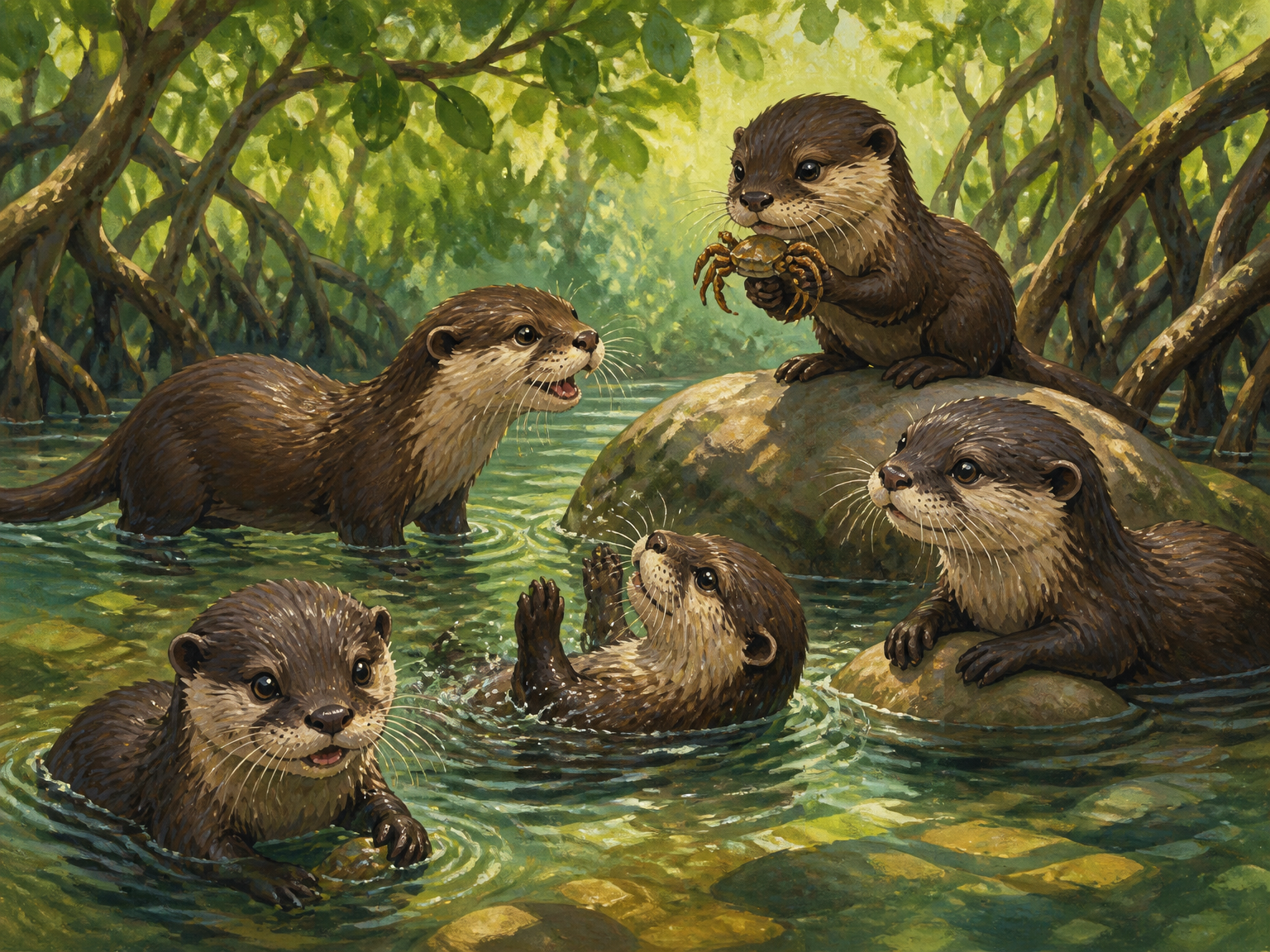
Imagine a riverbank in Southeast Asia. The water is clear and shallow, and the mud is soft. Suddenly, a small, dark-brown head pops up. Then another. Then three more. A family of otters is having breakfast. They are not much bigger than a house cat, and their paws are busy feeling around in the mud, looking for crabs. These are Asian small-clawed otters, the smallest otters in the whole world. Their claws are so tiny that they do not stick out past the ends of their fingers, like your fingernails when you keep them very short. This helps them feel for food in the mud and under rocks.
What makes them different from other otters?
You might have seen pictures of giant river otters in South America, which can be as long as a person is tall. Asian small-clawed otters are the opposite. They are the smallest otter species on Earth. A full-grown adult is only about as long as your arm, from your shoulder to your fingertips. They weigh less than a big bag of rice — about 3.5 kilograms. Their feet are also special. Most otters have big, strong claws for grabbing fish. But small-clawed otters have tiny, almost fingernail-like claws. Their front paws are very sensitive, like your fingertips. They use them to poke and feel around in mud and under stones to find crabs, snails, and shellfish. They are the only otters that use their hands more than their mouths to catch food.
Where do they live and what do they eat?
These otters live in rivers, streams, and mangrove swamps from India all the way to the islands of Indonesia and the Philippines. They love water that is not too deep or fast. You can find them in the muddy parts of the coast, where the river meets the sea. Their favourite food is crabs. They are very good at cracking open crab shells with their strong teeth. They also eat snails, frogs, and small fish. Because they live in warm places, they do not need thick fur like otters in cold countries. Their fur is short and smooth, which helps them slide through the water quickly.
Are they in danger?
Yes, Asian small-clawed otters are listed as "Vulnerable" on the official list of animals that need protection. That means they are not yet in the most dangerous category, but their numbers are going down. The biggest problem is that people are cutting down the forests and building on the land near rivers, which destroys the otters' homes. Pollution in the water also hurts them. In some places, people hunt them for their fur or to sell them as pets. Many zoos around the world keep these otters in special habitats to help protect them. In Hong Kong, you can see them at Ocean Park, where they live in a big, watery playground with lots of rocks and pools.
- animal
- nature
- conservation
- Hong Kong