Giant Panda
Giant pandas are black-and-white bears that live only in the mountain forests of China. They eat almost nothing but bamboo, spending half the day chewing. They are true bears, but they live alone and have a special thumb for holding bamboo. Thanks to protection efforts, their numbers are growing again.
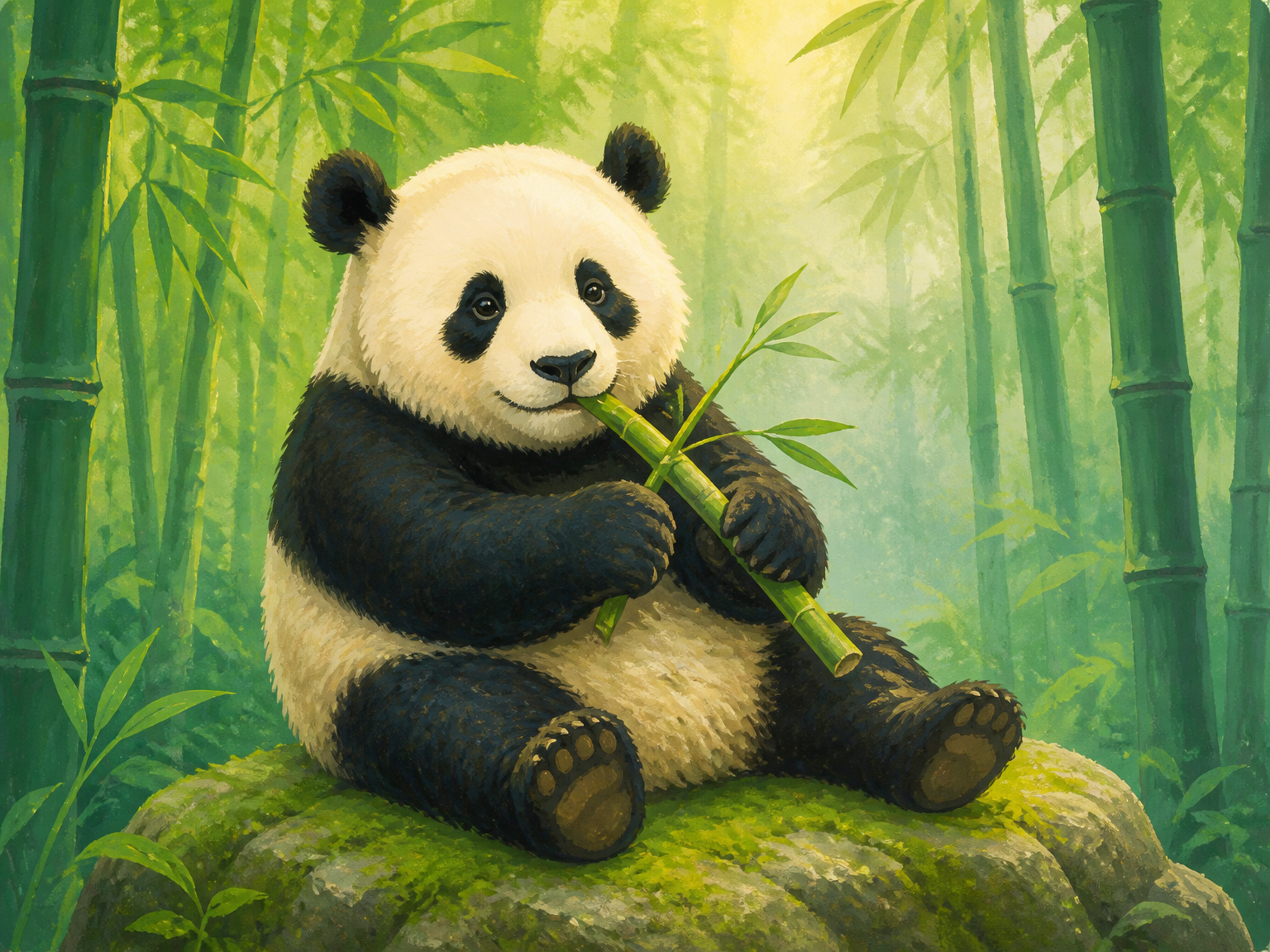
Imagine a bear that looks like it is wearing a black-and-white costume. Its body is round and fluffy, its ears are black, and its eye patches make it look like it is always wearing sunglasses. This is the giant panda, one of the most famous animals on Earth. But there is much more to it than its cute face.
Where do giant pandas live?
Giant pandas live only in the wild in six mountain areas in China. These places are in Sichuan, Shaanxi and Gansu provinces. The forests there are high up, sometimes 3,000 metres above sea level — that is higher than the top of Victoria Peak in Hong Kong. The pandas live among thick bamboo forests, where the air is cool and misty. They do not share their home with many other pandas. Each panda has its own territory, like a private room in a giant green house.
What do giant pandas eat?
You might think a bear would eat meat, but giant pandas are mostly vegetarian. Almost all of their food — about 99 per cent — is bamboo. They eat the stems, the leaves and the shoots. Because bamboo is not very nutritious, a panda has to eat a lot. An adult panda spends about 12 hours a day eating, and it can munch through 12 to 38 kilograms of bamboo in one day. That is like you eating 200 bowls of rice every day just to stay full. Pandas have a special extra "thumb" on their front paws, which is actually a modified wrist bone. It helps them grip the bamboo tightly while they chew.
Are giant pandas bears?
Yes, giant pandas are true bears. They belong to the bear family, Ursidae, just like brown bears and polar bears. But they split off from other bears a long time ago. Scientists can tell by looking at their DNA. Even though they eat bamboo, their digestive system is still built like a meat-eater's. That is why they have to eat so much — they do not digest bamboo very well. In the wild, giant pandas live alone. They meet other pandas only when they want to have babies. A mother panda raises her cub for about one and a half to two years, teaching it how to find bamboo and stay safe.
How are giant pandas protected?
A long time ago, giant pandas lived in many lowland forests, but people cut down those forests for farming and building. By the 1980s, there were very few pandas left in the wild. China set up special nature reserves to protect them. People also worked hard to stop poaching — that means hunting animals illegally. The good news is that the wild panda population has grown. In 2016, the IUCN, which keeps track of endangered animals, changed the panda's status from "endangered" to "vulnerable". That means it is still at risk, but things are getting better. Today, there are about 1,800 pandas living in the wild, and more than 600 in zoos and breeding centres around the world.
- 大熊貓
- 熊貓
- 熊科
- 中國
- 竹林
- 瀕危動物