How Hexagonal Rock Columns Form
Have you ever seen rock columns that look like a giant honeycomb? They form when lava cools and cracks into neat six-sided shapes — one of nature's most amazing geometric wonders.
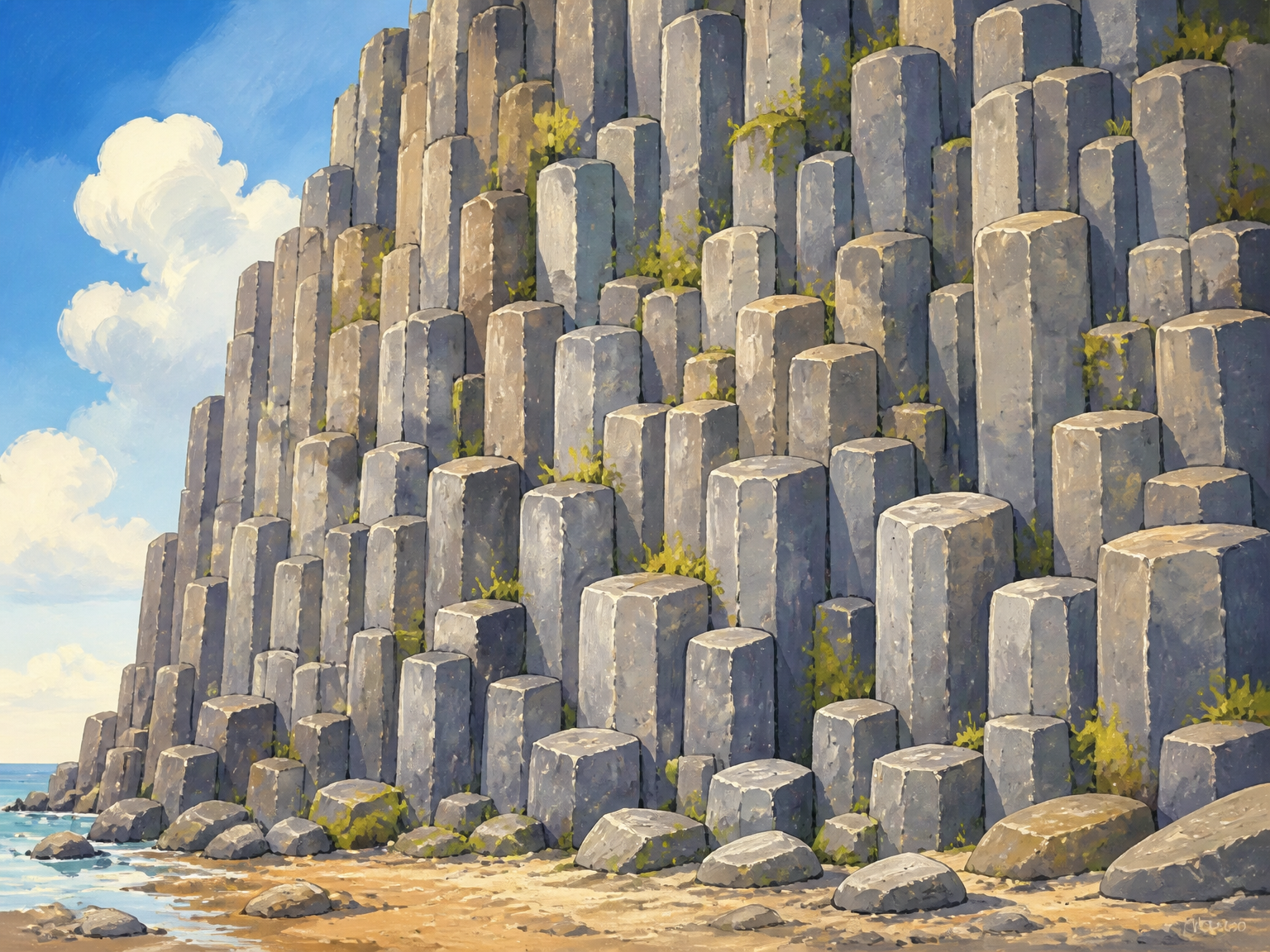
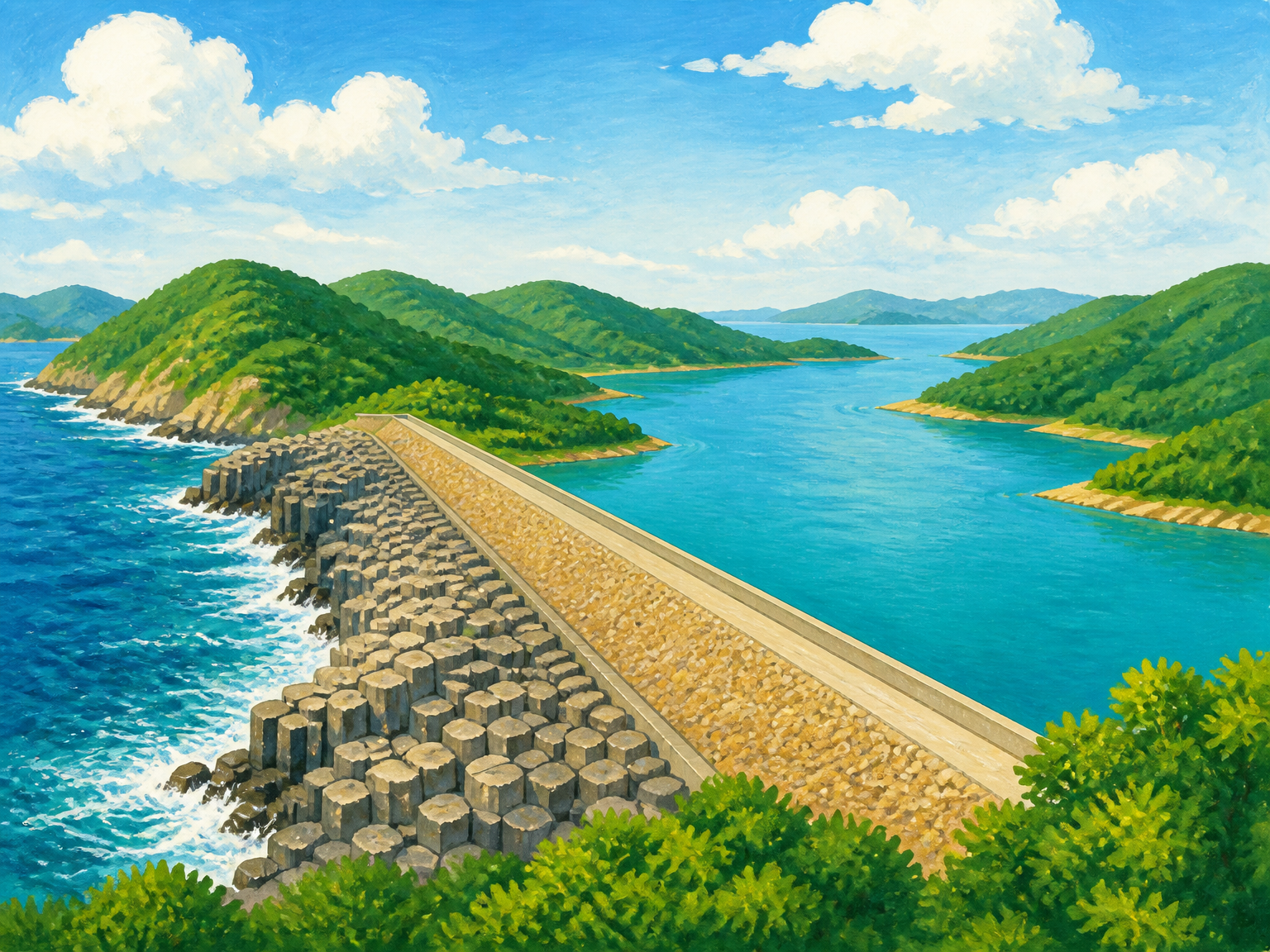
Imagine standing in front of a steep cliff, and instead of jumbled rocks, you see neat, six-sided stone pillars packed together like a giant bundle of pencils. You can see this for real at the High Island Reservoir East Dam in Hong Kong. How did these rocks become six-sided? The answer starts with a volcanic eruption a very long time ago.
How does lava cool?
About a hundred million years ago, the area that is now Hong Kong had intense volcanic activity. Red-hot lava, as hot as a pizza oven, erupted from the ground. It was thick and sticky, like cold porridge, and it slowly spread out before starting to cool. As it cooled, the lava shrank — just like mud shrinks when it dries out. This shrinking created cracks in the rock.
Why are the cracks six-sided?
When lava cools evenly, it shrinks from many centres at the same time. Imagine a tray of wet sand drying out — it cracks into pieces. If the shrinking is very even, the cracks join up to form hexagons. Why hexagons instead of circles or squares? Because a hexagon is the most efficient shape: it fills a flat surface with the fewest cracks, and every corner is 120 degrees, which is very stable. Beehives use hexagons for the same reason.
How do the columns grow tall?
The cracks do not all appear at once. The lava starts cooling from the top, and the cracks zip open from the surface downwards, like a zipper. Each crack runs straight down, slicing the lava into separate columns. These columns can be as tall as a ten-storey building — some reach dozens of metres. In Hong Kong, most of these hexagonal columns are light grey because they contain a lot of silica, the same material used to make glass.
Where can you see hexagonal rock columns?
One of the most famous places to see them is the Giant's Causeway in Ireland, where the columns stretch from the cliff into the sea like a stone road. But Hong Kong's hexagonal columns cover an even larger area and are among the biggest of their kind in the world. If you visit the High Island Reservoir East Dam or the Ninepin Islands, you can see this natural geometric masterpiece for yourself.
- hong kong
- geology
- volcano
- rock formation
- nature
- science